
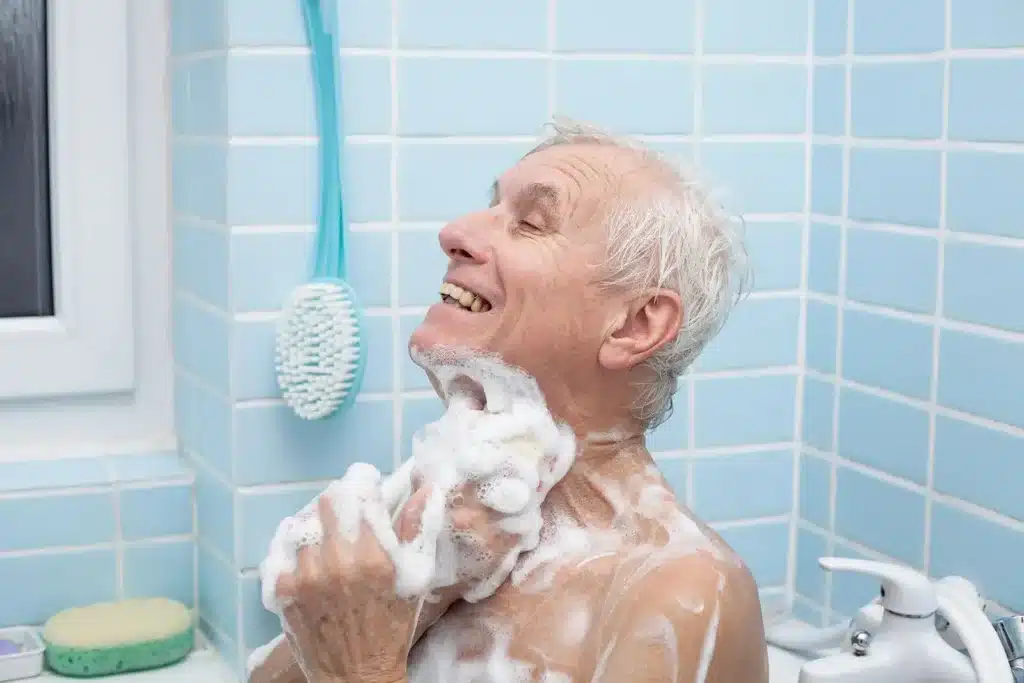
For many older adults, bathing is one of the most hazardous parts of the day. A wet floor, a high tub wall, or a brief loss of balance can quickly result in a serious fall. While many families worry about outdoor accidents or driving, the bathroom often presents the greatest daily risk. Understanding why these injuries become more common with age—and how personal care services can help prevent them—can make a significant difference in helping a loved one remain safe at home.
Why the Bathroom Becomes More Dangerous with Age
Aging naturally brings physical changes that can make bathing more difficult than it once was. Decreased muscle strength, reduced flexibility, slower reaction times, and changes in balance all increase the likelihood of slipping or falling.
Vision changes can also make it harder to see puddles of water or judge the height of a bathtub. Arthritis may make stepping over a tub wall painful, while neuropathy or poor circulation can reduce sensation in the feet, making stable footing more difficult.
For seniors living with Parkinson’s disease, stroke recovery, Alzheimer’s disease, or other chronic health conditions, these risks can become even greater.
Unlike many other household activities, bathing combines several hazards at once: water, smooth surfaces, confined spaces, and frequent changes in body position.
The Consequences Can Be Serious
A fall in the bathroom is rarely just a minor incident.
Many bathroom falls result in fractures, head injuries, or soft tissue injuries that require emergency treatment or hospitalization. Even when the injuries are not severe, they often create something equally challenging: fear.
After experiencing a fall—or even a close call—many seniors begin avoiding showers altogether. Some start bathing less frequently because they no longer feel confident entering the tub or standing under the shower. Poor hygiene can then contribute to skin irritation, infections, and declining overall health.
Family members may notice subtle changes first, including:
- Wearing the same clothes for several days
- Delaying showers longer than usual
- Expressing anxiety about bathing
- Asking for help with tasks they once handled independently
- Complaining about feeling unsteady in the bathroom
These changes shouldn’t be dismissed as simply “getting older.” They may indicate that bathing has become unsafe without assistance.
Small Home Changes Can Make a Big Difference
Fortunately, reducing bathroom hazards often doesn’t require a complete renovation.
Several relatively simple modifications can dramatically improve safety, including:
- Installing grab bars near the toilet and inside the shower
- Using non-slip bath mats inside and outside the tub
- Adding a shower chair or transfer bench
- Installing a handheld showerhead
- Improving bathroom lighting
- Removing loose rugs and clutter
- Raising the height of the toilet if needed
These adjustments reduce fall risks while allowing seniors to maintain as much independence as possible. However, even with safety equipment, some individuals still require assistance to bathe safely.
Knowing When Extra Help Is Needed
Families sometimes struggle with deciding when it’s time to bring in help. A parent may insist they’re managing fine, even after several near misses.
Some signs that additional assistance may be appropriate include:
- Difficulty stepping into or out of the bathtub
- Needing to hold onto unstable objects for balance
- Becoming exhausted while bathing
- Forgetting bathing routines because of memory loss
- Recovering from surgery or illness
- Previous falls in the bathroom
It’s important to remember that accepting assistance isn’t giving up independence. In many cases, having help actually allows seniors to continue living safely in their own homes much longer than they otherwise could.
How Personal Care Services Improve Bathing Safety
One of the most valuable aspects of personal care services is providing assistance with activities that carry the highest risk of injury while preserving dignity and independence.
Professional caregivers understand how to safely assist with bathing based on each person’s mobility, balance, and physical abilities. Rather than taking over completely, they encourage seniors to do as much as they comfortably can while providing support where it’s needed most.
This assistance may include helping someone safely enter and exit the shower, maintaining balance during bathing, washing difficult-to-reach areas, drying off safely, and assisting with dressing afterward.
Just as importantly, caregivers help establish consistent routines. Regular bathing not only supports physical health but also contributes to emotional well-being and confidence.
Families often discover that having a trained caregiver assist with personal hygiene removes one of the most stressful parts of caregiving. Adult children can focus on enjoying time with their parent instead of worrying every time they step into the shower.
Protecting Independence While Reducing Risk
Many seniors initially resist assistance because they fear losing control over their daily lives. This concern is understandable.
The goal isn’t to replace independence—it’s to protect it.
Receiving help with one challenging activity often allows older adults to continue managing many other aspects of daily living on their own. Instead of risking a devastating fall that could lead to hospitalization or long-term institutional care, they receive just enough support to remain safe.
This approach also provides peace of mind for families. Knowing someone is available to assist during one of the day’s riskiest activities can significantly reduce worry, especially for adult children who live at a distance or cannot visit every day.
When seniors feel secure, they’re often more willing to remain active, maintain healthy routines, and continue participating in the activities they enjoy.
A Safer Bath Today Can Protect Tomorrow
Bathroom safety is easy to overlook until something goes wrong. Yet many serious falls can be prevented with early planning, thoughtful home modifications, and the right level of support.
If you’ve noticed your parent becoming hesitant to shower, mentioning balance problems, or recovering from a recent fall, don’t wait for a more serious accident to occur. These are often signs that additional assistance could make a meaningful difference.
With the support of personal care services, seniors can continue bathing safely, maintain their dignity, and remain comfortable in the place they call home. Sometimes the best way to preserve independence isn’t encouraging someone to do everything alone—it’s ensuring they have the support they need to do it safely.
If you or an aging loved one are considering personal care services in Georgetown, KY please contact the caring staff at Caring Excellence today. Louisville Office: (502) 208-9424, Lexington Office: (859) 233-8490, Northern Kentucky Office: (859) 212-3224, Southern Indiana Office: (812) 512-3008
Caring Excellence provides Senior Home Care in Louisville, Middletown, St. Matthews, Prospect, Jeffersontown, Lexington, Georgetown, Nicholasville, Frankfort, Versailles, and surrounding areas.

- Dehydration in Older Adults: Warning Signs Families Should Never Ignore - October 16, 2026
- Caring & Planning with Excellence: A Free Community Event - October 12, 2026
- When Everyday Tasks Become Harder: Hand and Arm Challenges During Breast Cancer Recovery - October 5, 2026
